
Updated:
Pressure washing in Hanalei is not a one-size-fits-all job. Salt air, hard water, and trade winds leave exterior surfaces coated with residue that ordinary rinsing can't remove. But the same conditions that make cleaning necessary also make it risky: too much pressure can etch concrete, strip paint, or force water where it shouldn't go. Planning ahead protects your property and your budget. This guide walks you through the practical steps—from assessing your surfaces to verifying the finished work—so you can book with confidence.
What to Know Before You Start
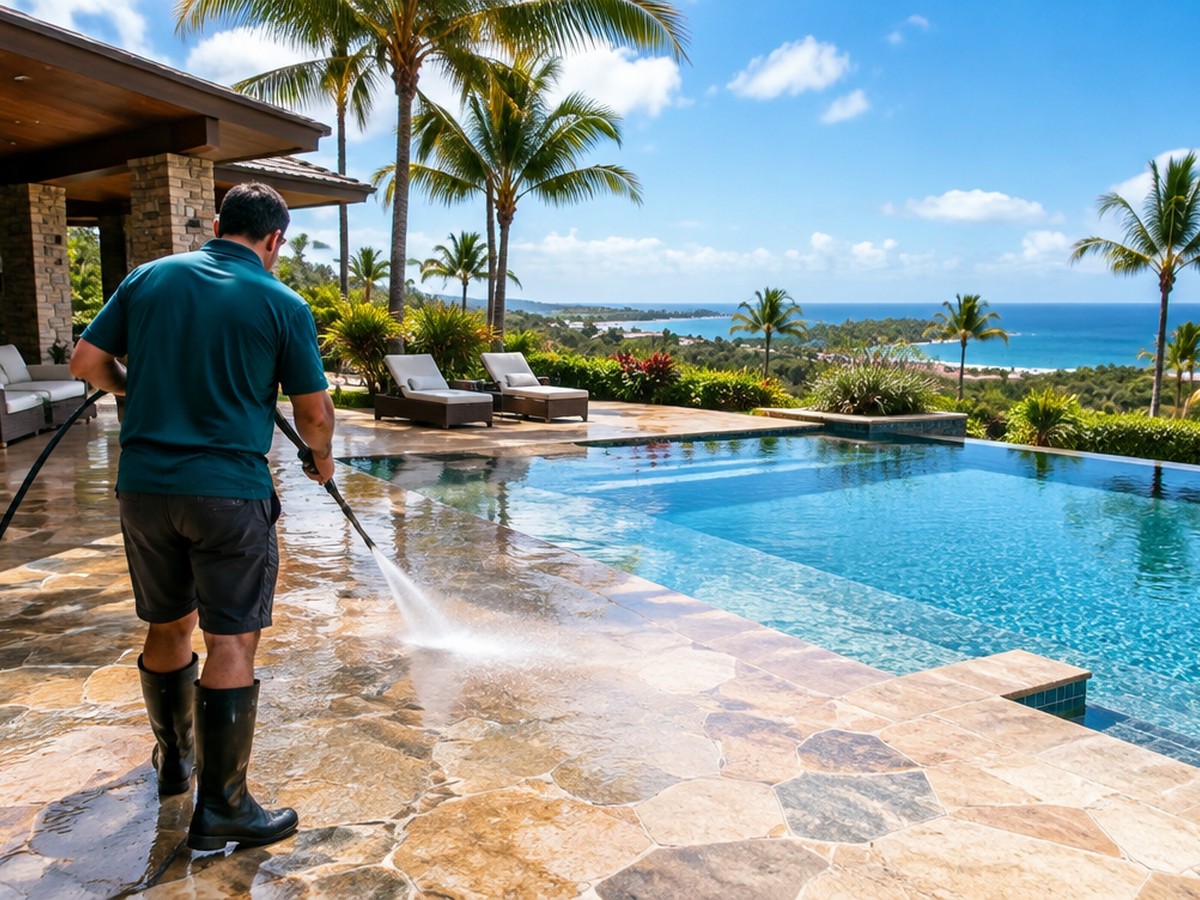
Before you call a provider, take stock of what you're actually dealing with. Hanalei's coastal environment creates specific challenges: salt spray dries into a hazy film, hard water leaves mineral spots, and trade winds push fine grit into every crevice. A good pressure washing plan starts with an honest look at your property.
Identify the surfaces you need cleaned
Walk around your property and list every surface that needs attention. Common candidates include driveways, lanais, pool decks, roofs, and siding. Each surface has different tolerances. Concrete can handle higher pressure than painted wood or older roofing. Note the material, its condition, and any existing damage like cracks or peeling paint. This list becomes the basis for your quote and helps you compare providers on the same scope.
Check for access and obstacles
Pressure washing equipment needs room to work. Look for gates, landscaping, outdoor furniture, and vehicles that might block access. If you have a multi-story home, consider how a crew will reach upper areas safely. Clear access before the crew arrives, but also mention any tight spots when you request a quote. A provider who asks about access is thinking about safety and efficiency.
Understand the local conditions
Hanalei's salt air and hard water mean residue builds up faster than in drier climates. You may need more frequent cleanings, and the cleaning method matters. Soft washing—using lower pressure and specialized cleaning solutions—is often safer for delicate surfaces. Ask any provider how they adjust their approach for coastal conditions. A one-size-fits-all pass with a wand is a red flag.
Step-by-Step Planning Process
Follow these steps in order to move from assessment to a completed job without surprises.
- Document your surfaces and their condition. Take photos of each area, noting any existing damage. This gives you a baseline and helps you spot new damage after the job.
- Define your scope. Decide exactly which surfaces you want cleaned. Do you need just the driveway, or also the lanai, pool deck, and siding? A clear scope prevents misunderstandings and makes quotes comparable.
- Research providers. Look for companies that offer pressure washing in Hanalei. Check their websites for service descriptions, and read any published guidance. Kamaliʻi Exterior Solutions, for example, lists pressure washing among its services and publishes articles on what to ask before booking.
- Ask the right questions. Before you book, ask each provider about their cleaning methods, water quality, safety practices, and what their quote includes. A trustworthy provider will explain how they match pressure and technique to each surface.
- Get a written quote. A complete quote should itemize the surfaces, the cleaning method, the expected outcome, and any preparation you need to do. Avoid vague estimates.
- Prepare your property. On the day before service, move vehicles, furniture, and fragile items away from work areas. Secure pets and inform anyone on the property about the schedule.
- Verify the work. After the job, walk through with the crew. Check that all agreed surfaces are clean, no new damage has occurred, and water has drained properly. Address any concerns before the crew leaves.
How to Compare Providers
Not all pressure washing services are the same. Use these criteria to evaluate your options without guessing.
Cleaning method and equipment
Ask what pressure and technique they use for different surfaces. A professional should calibrate the approach—soft washing for roofs and siding, higher pressure for concrete. If they can't explain their method, keep looking.
Water quality and runoff
Hard water can leave spots if not handled correctly. Ask whether they use filtered or deionized water, and how they manage runoff. In Hanalei, where water conservation matters, a provider who plans for runoff is a plus.
Safety and insurance
Pressure washing involves ladders, high-pressure equipment, and sometimes working at height. Verify that the provider carries appropriate insurance and follows safety protocols. Don't be afraid to ask for proof.
Scope and pricing transparency
A written quote should break down the work by surface and include any preparation or cleanup. Beware of quotes that are dramatically lower than others—they may cut corners on safety or thoroughness.
Common Mistakes to Avoid
Even careful homeowners make these planning errors. Watch for them.
- Skipping the surface assessment. Without a baseline, you can't tell if the cleaning caused damage or if an existing crack got worse.
- Choosing on price alone. The cheapest quote may use excessive pressure or skip important steps. Compare scope and method, not just the bottom line.
- Ignoring coastal buildup. Salt film and hard water spots require specific cleaning solutions. A provider who treats Hanalei like any other town may leave residue behind.
- Not preparing the property. Blocked access wastes time and can lead to incomplete cleaning. Move obstacles before the crew arrives.
- Skipping the final walkthrough. Always inspect the work before paying. Point out any missed spots or concerns immediately.
What to Do After the Job
Once the pressure washing is complete, take a few final steps to protect your investment.
Inspect and document
Compare the after photos to your before photos. Look for any new damage, such as etching on concrete or paint removal. If you find issues, discuss them with the provider right away.
Plan for maintenance
Ask your provider how often they recommend cleaning for your specific surfaces. In Hanalei's coastal climate, you may need more frequent service than a homeowner inland. A maintenance schedule helps prevent heavy buildup.
Keep records
Save your quote, invoice, and any notes from the walkthrough. If you need to file a warranty claim or schedule future work, these records will be useful.
For more detailed questions to ask before booking, see 7 Questions to Ask Before Booking Pressure Washing in Hanalei. If you're weighing professional service against doing it yourself, Pressure Washing vs. DIY in Hanalei compares the tradeoffs.